Profile Bending Machine Selection Tips for Steel Structure Projects
Introduction
Steel structure projects, including large span buildings, arch frameworks, workshop frames, bridge supports and green energy steel components, heavily rely on accurate profile bending work. Angle steel, channel steel, I beam, H beam, square & rectangular tubes must be rolled into consistent arcs or circular segments for on site assembly.
A poorly matched profile bending machine causes twisted profiles, section collapse, inconsistent radius, high scrap rates and costly project delays. Many fabricators only compare price without checking real world working capacity, which leads to heavy losses after machine installation.
This buying guide shares practical selection tips specifically for steel structure contractors and metal fabrication workshops, helping you pick a suitable profile bending machine for your project requirements.
1. Define Your Real World Project Processing Requirements
Before checking machine models, sort out your actual workpiece data. This step avoids buying under capacity or over specified equipment.
• Profile types: Confirm what sections you mostly bend: angle steel, U channel, I beam, H beam, square tube or round tube. Note whether you bend inward or outward for angle & channel steel.
• Maximum section modulus: This is the core technical index, not only nominal size. Section modulus decides the real bending force the machine can deliver for structural steel.
• Material yield strength: Most steel structure parts use Q235 / S235JR mild steel. If you process high strength steel, you need to upgrade machine capacity accordingly.
• Minimum bending radius: Record the smallest inner radius required by your drawings. Too tight radius will lead to profile distortion even if size fits.
• Production volume: Small batch one off projects vs mass repeated production decide whether you need manual, semi hydraulic or CNC automatic type.
Pro Tip: Add a 20 30 % safety margin for machine capacity. Real world raw material variations will consume extra bending force.
2. Evaluate Machine Mechanical Structure & Rigidity
For heavy duty steel structure bending, frame and roller rigidity directly control long term accuracy.
1. Machine frame: Prefer heavy duty integral welded or cast weld composite frame. Thin lightweight frames deflect under heavy load, producing uneven arcs on long structural profiles.
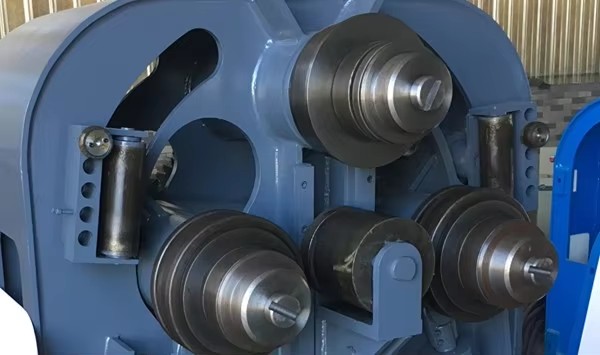
2. Roller material & hardness: Working rollers should be quenched hardened steel (HRC 55 58). Soft rollers will wear quickly when bending carbon steel structural profiles.
3. Drive system:
• Mechanical profile bender: Low cost, fit for low demand, small volume jobs. Not recommended for critical steel structure components.
• Full hydraulic profile bender: Mainstream choice for steel structure projects. Delivers stable bending torque for large channels and beams, reduces twisting risk.
4. Anti distortion guiding mechanism: Asymmetric profiles such as angle steel and channel steel easily twist during rolling. Reliable side guiding devices keep sections in shape and lower scrap rate.
3. Choose Proper Control Mode: Manual, Semi Automatic or CNC
Select control solution based on your workshop output and tolerance requirements.
• Manual / semi hydraulic: Good for small batch, non high precision steel structure projects. Lower investment, simple operation. Operators need rich experience to compensate material springback.
• CNC hydraulic profile bending machine: Recommended for medium to large steel structure fabricators. Operators input target radius; the system controls roller displacement automatically. It stores multiple bending programs, improves repeat accuracy and reduces human error. CNC models handle high consistency arch beam production efficiently.
Note: Even CNC machines cannot eliminate material springback completely. Confirm whether the system supports spring back compensation function for structural steel.
4. Tooling & Roller Die Compatibility
Different structural profiles need matched roller dies. Poor fitting tooling is one top reason for section collapse and deformation.
• Confirm standard roller sets supplied with the machine: angle steel, channel steel, tube rollers.
• For mixed profile production, choose machines supporting quick change modular tooling, to cut downtime between different workpieces.
• If you regularly bend special size H beams or large rectangular tubes, ask whether custom dies are available and check extra cost in advance.
5. Practical Site & After Sales Considerations
Many buyers ignore installation and service factors, which create trouble after delivery.
1. Shop floor condition: Check machine footprint, total weight, power supply (380V 50Hz for most European markets), lifting access for unloading heavy units.
2. Spare parts availability: Hydraulic seals, bearings and rollers are wearing parts. Confirm supplier can provide fast spare part delivery for overseas projects.
3. Documentation & training: Request English operation manuals, maintenance guides and basic operation training. Steel structure fabricators often have operators new to profile bending equipment.
4. Warranty term: Standard 1 year warranty is common. Clarify whether warranty covers hydraulic components and main bearings.
5. Certification: For EU steel structure projects, confirm CE compliance if required for customs clearance.
6. Common Pitfalls to Avoid for Steel Structure Buyers
1. Only look at nominal profile size, ignore section modulus: Some suppliers mark big nominal profile size, while actual section modulus capacity is low. It cannot bend heavy load structural steel in real production.
2. Underestimate springback: High strength structural steel bounces significantly. Your machine and tooling must account for springback, otherwise finished radius fails drawing requirements.
3. Ignore anti twist accessories: Angle and channel steel bending without side guides will produce twisted workpieces unusable for steel structure assembly.
4. Over focus on low price: Cheap machines use thin frames and low quality hydraulic components. Frequent breakdowns halt your whole steel structure project schedule.
Conclusion
Selecting a profile bending machine for steel structure projects is not only about price comparison. You need to match machine capacity, rigidity, tooling and automation level to your real world workpiece specifications. A well selected bender lowers scrap rate, speeds up component fabrication and guarantees on time delivery for your steel structure projects.
If you are looking for reliable hydraulic or CNC profile bending machine solutions for steel structure fabrication, feel free to contact our technical team for customized quotation and capacity verification.