How Does a Hydraulic CNC Press Brake Work? Complete Working Principle
Core Components of a Hydraulic CNC Press Brake
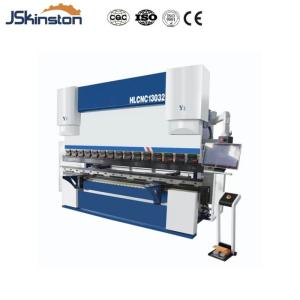
To understand how a CNC hydraulic press brake works, it is essential to first know its key functional components. Every core part coordinates closely to complete precise metal bending:
CNC Control System: The "brain" of the press brake. Operators input bending parameters including sheet metal thickness, bending angle, bending length, tonnage, and stroke. The CNC system automatically calculates and adjusts all movement data, realizing intelligent and precise control.
Hydraulic Power System: The power source of the entire machine, composed of hydraulic pumps, oil cylinders, hydraulic valves, and oil tanks. It provides stable and powerful pressing force to drive the upper beam and punch to move up and down.
Machine Frame & Beam Structure: Consists of a rigid welded frame, upper movable beam, and lower fixed worktable. The high-rigidity structure effectively prevents deformation during high-pressure bending and ensures long-term processing accuracy.
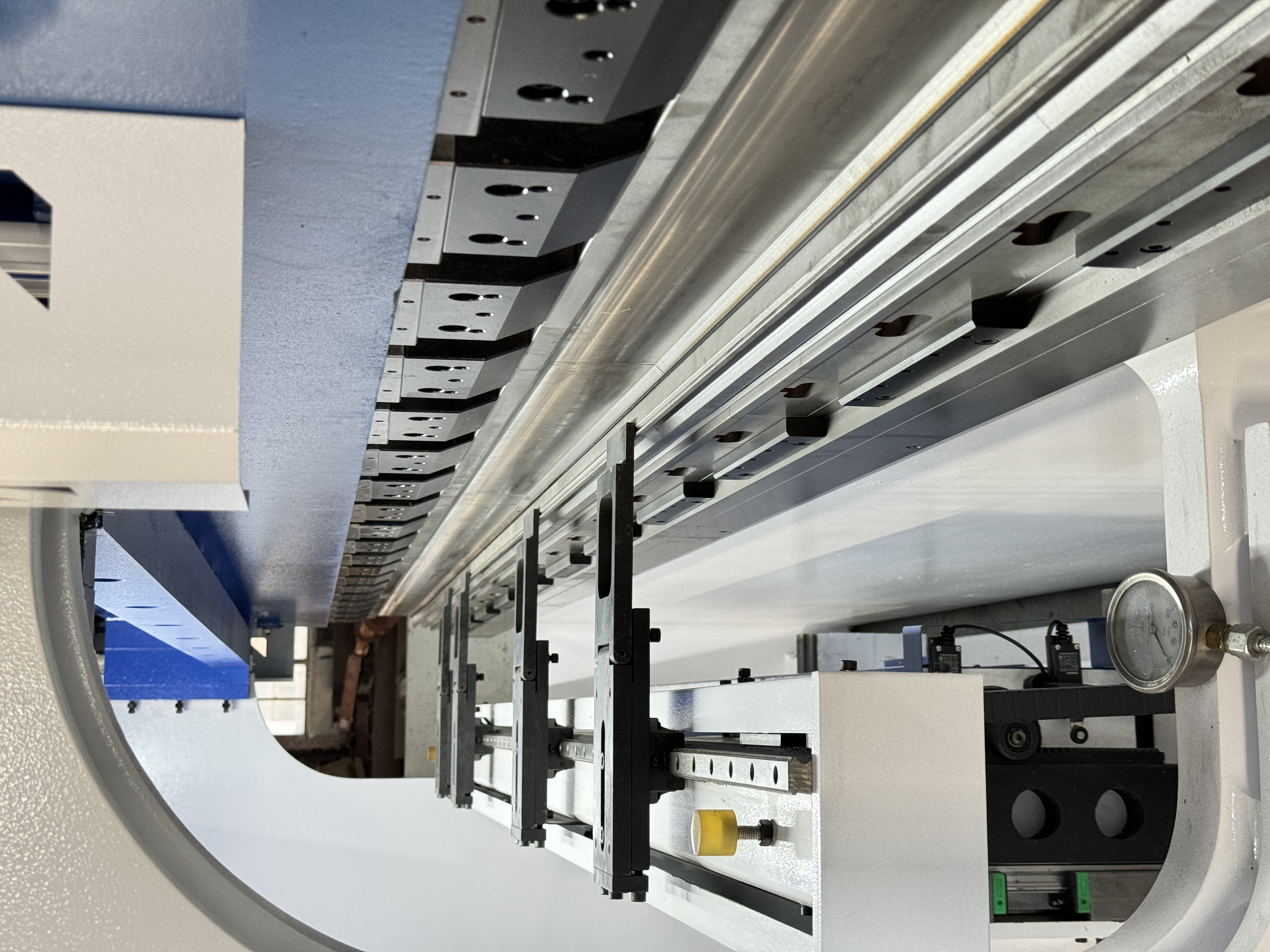
Bending Molds: Including upper punch (V-shaped punch) and lower V-die. Different mold openings and shapes match various metal thicknesses and bending requirements to form standard bending angles.
Backgauge System: A servo-driven positioning device. It accurately adjusts the feeding distance of the sheet metal, ensuring consistent bending size for every workpiece and eliminating manual positioning errors.
Servo Motor & Transmission Device: Controls the precise movement of the backgauge and beam stroke, cooperating with the CNC system to achieve micron-level positioning accuracy.
Working Principle of Hydraulic CNC Press Brake
The working logic of a hydraulic CNC press brake is based on hydraulic pressure power transmission + CNC digital precision control + mechanical mold forming. The entire working process is automatic, accurate, and repeatable, which is the fundamental reason why it replaces traditional manual bending equipment. The complete working principle is divided into four core stages:
1. Parameter Setting & Program Input (Preparation Stage)
Before production, operators input processing parameters into the CNC controller according to the metal workpiece requirements, including metal material (carbon steel, stainless steel, aluminum alloy), sheet thickness, target bending angle, bending width, and processing quantity. The built-in algorithm of the CNC system automatically calculates the required hydraulic tonnage, piston stroke, backgauge position, and bending speed. For batch production, the system can save the processing program for one-click recall in subsequent production, greatly improving production efficiency.
2. Precise Positioning & Feeding
After the program is confirmed, the servo motor drives the backgauge system to automatically adjust to the preset positioning size. Workers place the metal sheet on the lower die of the worktable and fit the sheet edge closely against the backgauge baffle. The high-precision backgauge ensures that each feeding position is completely consistent, which is the key to ensuring uniform size of batch bent parts.
3. Hydraulic Pressing & Metal Bending Forming
This is the core forming stage of the press brake. The CNC system sends operation signals to the hydraulic system, and the hydraulic pump starts to work, pushing hydraulic oil into the upper oil cylinder. Under the action of hydraulic pressure, the upper beam and V-shaped punch move downward steadily at a set speed.
When the punch contacts the metal sheet, continuous hydraulic pressure applies uniform pressing force to the sheet. The metal sheet is squeezed between the upper punch and lower V-die, producing elastic and plastic deformation. With the continuous downward stroke of the punch, the metal sheet is bent to the preset angle, completing the one-time bending forming process. The hydraulic system provides stable and constant pressure, avoiding insufficient pressure or uneven force that leads to unqualified bending angles.
4. Pressure Holding, Resetting & Workpiece Discharging
After reaching the preset bending stroke and angle, the hydraulic system maintains pressure for a short time to eliminate the elastic rebound of the metal sheet, ensuring the bending angle is accurate and stable. Then the CNC system controls the hydraulic valve to reverse the oil circuit, the oil cylinder drives the upper punch to rise and reset automatically, and the backgauge returns to the initial position. Workers take out the finished bent workpiece, and one complete bending cycle is finished. The machine can immediately start the next processing cycle for continuous batch production.
What Makes Hydraulic CNC Press Brake Different From Ordinary NC Press Brake?
Many overseas buyers confuse hydraulic NC press brakes with CNC press brakes, but their working principles and performance are vastly different:
Ordinary NC Press Brake: Adopts semi-automatic control, requiring manual adjustment of most parameters, low positioning accuracy, unstable bending consistency, and only suitable for simple and low-precision bending processing.
Hydraulic CNC Press Brake: Full digital automatic control, all parameters are intelligently calculated by the system, with automatic error correction function, high processing accuracy (error within ±0.01mm), stable batch consistency, and support for complex multi-angle and multi-step bending processes.
Key Advantages of Hydraulic CNC Press Brake Working Mechanism
The unique working principle makes hydraulic CNC press brakes the mainstream equipment for high-end sheet metal processing worldwide, with irreplaceable advantages:
High Precision & Low Error: CNC precise positioning + stable hydraulic pressure effectively avoids bending angle deviation and size error, meeting the precision requirements of electrical cabinets, elevator parts, kitchen equipment, and automotive sheet metal parts.
Stable & Durable Operation: The hydraulic transmission system has strong bearing capacity and uniform force, reducing machine wear. The rigid frame structure ensures long-term stable operation without deformation.
High Production Efficiency: Programmable batch processing, automatic positioning and resetting, greatly reducing manual operation steps and shortening production cycle.
Strong Compatibility: It can process carbon steel, stainless steel, aluminum, copper and other metal materials, and complete various complex bending forming tasks.
Low Operation Cost: Intelligent parameter matching reduces material waste and failure rate, saving labor and maintenance costs for factories.
Common Application Scenarios
Benefiting from its reliable working principle and stable performance, hydraulic CNC press brakes are widely used in various industrial fields: sheet metal fabrication workshops, electrical enclosure manufacturing, elevator production, kitchenware and hardware processing, steel structure engineering, automotive parts manufacturing, and aerospace sheet metal processing.
Final Thoughts
A hydraulic CNC press brake realizes efficient, precise, and automatic metal bending through the perfect cooperation of CNC intelligent control and hydraulic power transmission. Its scientific working principle not only ensures processing accuracy and production efficiency but also guarantees long-term stable operation of the equipment, making it the essential core equipment for modern metal processing factories.